I was born as the son of parents who ran a traditional wagashi shop in Japan.
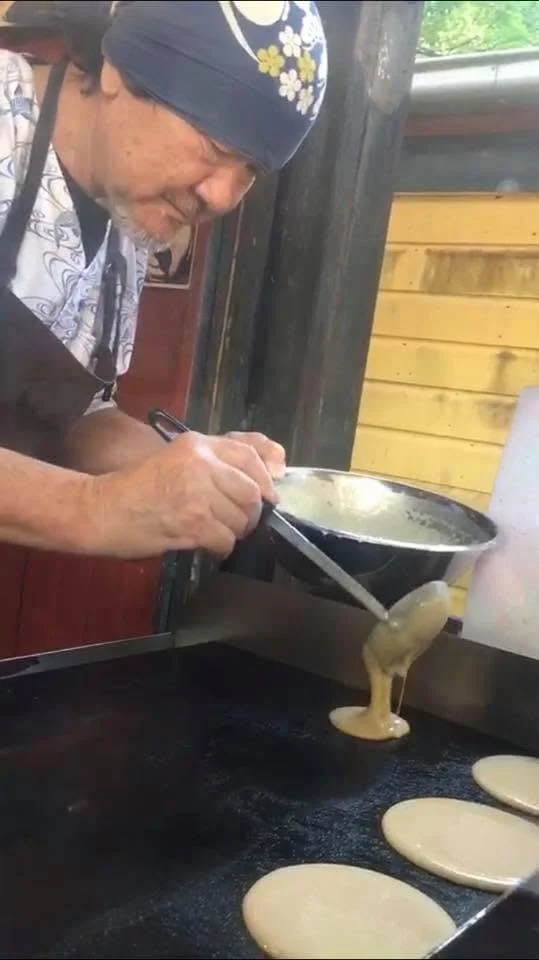
As the successor to the family business, I trained not only in Japanese confectionery but also in Western patisserie, and obtained my confectionery hygiene license.
However, I could never let go of my dream to go to Australia.
By a stroke of luck, in 1997 I came to Cairns as the head chef of a Japanese restaurant called Cherry Blossom.
After that, I worked as a chef on a diving boat and later for Qantas Airways preparing in-flight meals, gaining exposure to many different food cultures in Australia.
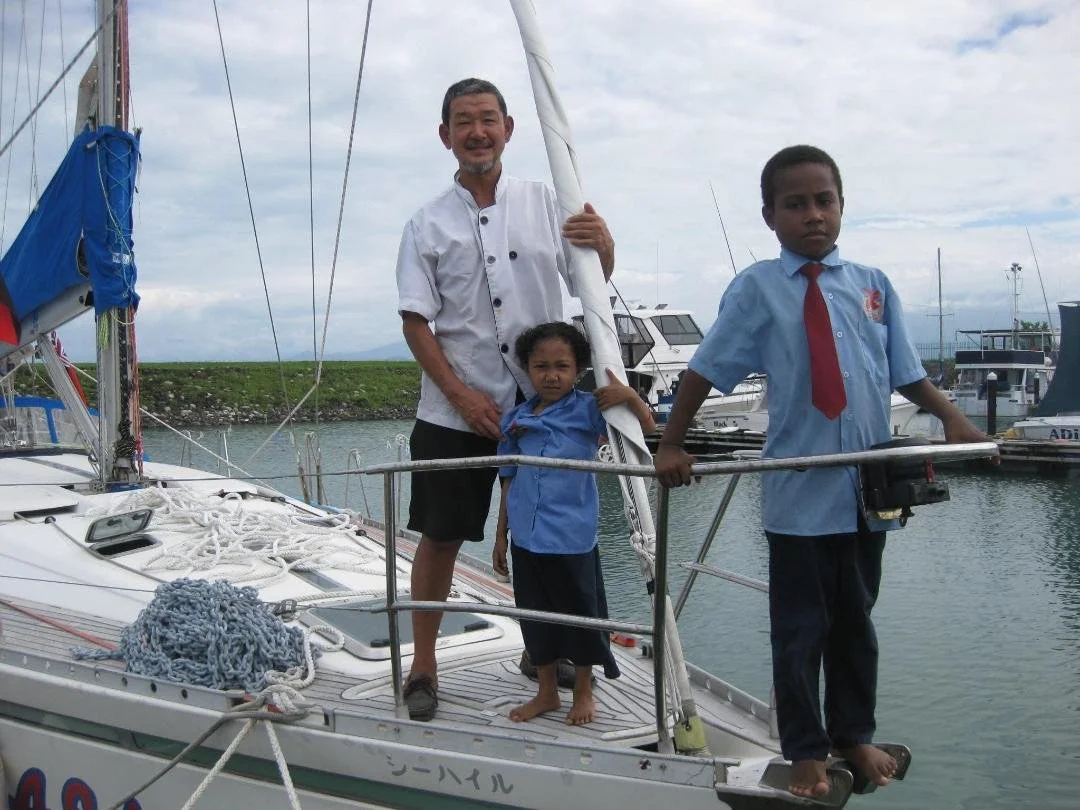
At one point I returned to Japan, bought a run-down 45-foot yacht, and spent two and a half years repairing it myself. Then I set sail alone from Okinawa toward Cairns.
Along the way I faced many storms. The autopilot failed, the engine broke down, the main sail fittings snapped, and the boat began taking on water.
I had planned to sail non-stop to Cairns, but with no choice I made an emergency stop in Guam for repairs. With only about $300 in cash, I couldn’t get proper repairs done—only a manual bilge pump and a blue plastic tarp.
After leaving Guam and crossing the equator into the southern hemisphere, each time the yacht took a wave, more water poured in and the floorboards began to float.
The manual pump wasn’t enough, so I spent entire nights bailing with a bucket. The bilge pump, of course, was broken.
Near Bougainville Island I gave up sailing directly to Cairns and decided to head to Lae in Papua New Guinea instead.
I worked in the kitchen at the Lae Yacht Club so they would reduce my berth fees.
Eventually I discovered the cause of the leak: in rough weather, the anchor chain had battered the inside of the anchor locker and cracked it, letting seawater inside.
The anchor itself was stored at the back of the boat.
One day, while I was repairing the yacht, someone approached me and asked if I would sell it. Since I had no money to fix it properly, I agreed immediately.
That person is now the Deputy Prime Minister of Papua New Guinea.
In the end, I stayed in PNG for almost six months.
When I returned to Cairns, I received news that my mother had cancer, so I went back to Japan again.
I stayed by her side for a year until she passed away.
The fact that I came to Australia without taking over the wagashi shop my parents had built always weighed heavily on my heart.
When I returned to Cairns and wondered what to do next, I made a decision:
I would carry on my late parents’ shop here in this land.
And I vowed to inherit my father’s way of life—his “Japanese spirit.”
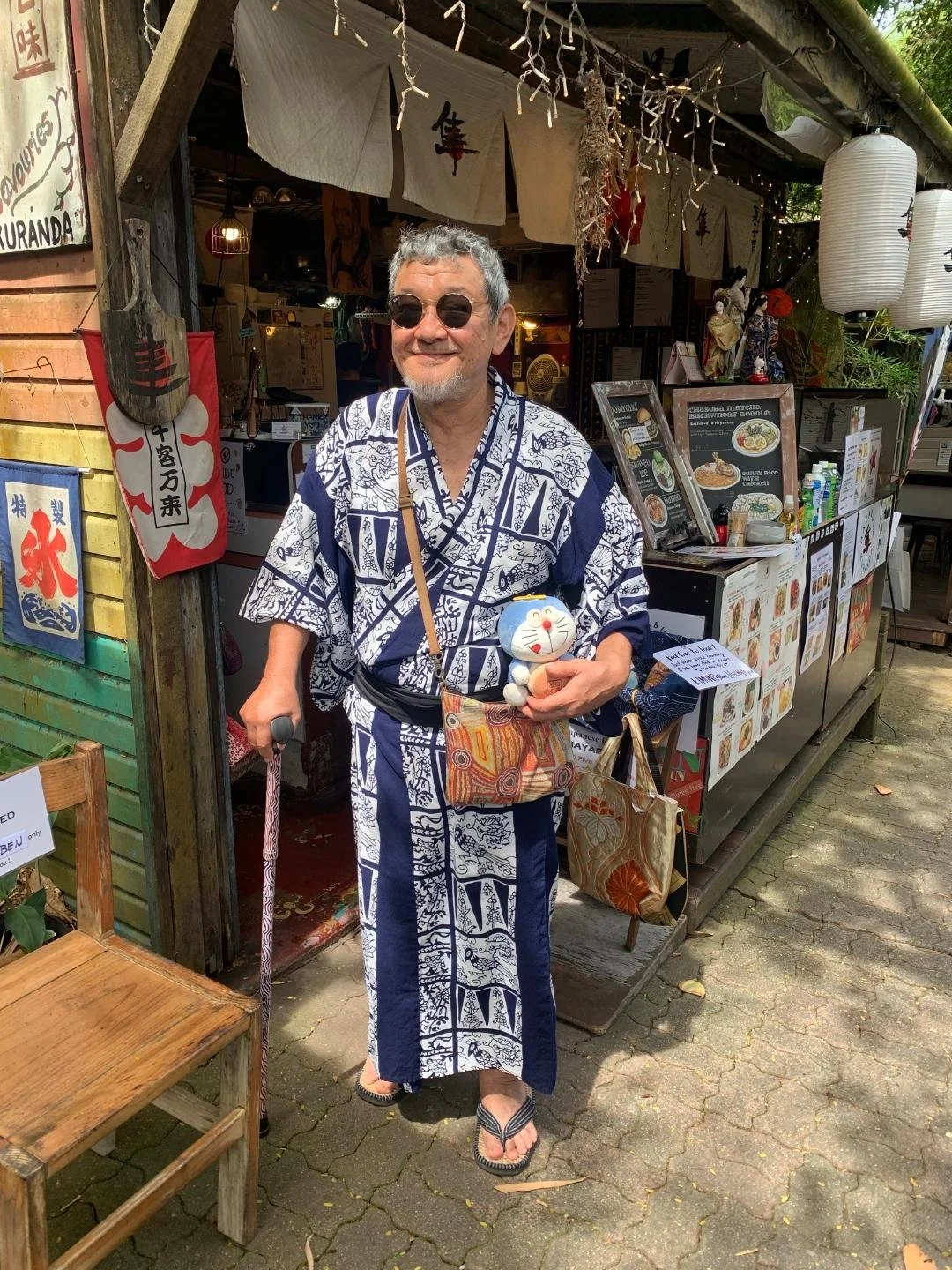
Twelve years ago, I started Hayabusa at the Kuranda Original Markets.
In the beginning, wagashi was not easily accepted by Australians, and I went through some difficult days.
But with a strong determination to “share Japanese culture with Australia through wagashi,” I continued the business.
Then one day, Miwako—now our Okami—walked into the shop.
Because she performs koto while wearing kimono, we could work together to share Japanese culture.
Later, we got married, and our lunch menu grew richer (even though, as the chef, I created all the recipes!).
The tea ceremony, which I started by simply copying what I had seen, is now something Miwako studies seriously in Japan every six months under a distinguished teacher.
What began as sharing Japanese culture through wagashi has now expanded to tea ceremony, koto, kimono, and more recently calligraphy.
I believe that Hayabusa is now in its most fulfilling period—not only as a successful shop but also as a bridge for cultural exchange between Australia and Japan.
I will probably retire before too long,
but Miwako, our Okami, along with all our wonderful staff, will carry on the spirit of Hayabusa.
We look forward to your continued support.
Ben’s Story
*
Ben’s Story *